


A Kraków enterprise-technology floor at dawn, a long row of workstations under raking warm light

Technology briefings · dated notes

Technology briefings on current enterprise topics

Published

5 November 2026

Scope

Enterprise IT in Poland

Format

Short, dated, no vendor pitch

Technology briefings are short, dated notes on the tools and platforms Polish enterprise teams are actively evaluating. They are written for readers who already know the category and want a clear read on where it stands, without a vendor pitch attached.

Operating cadence

1 2 3 4 5 6 7 weekly cycle, weekday notes
How to read a briefing
Snapshot Current-state read, not a final answer
Dated Answers change, notes carry their date
Linked Points to the fuller program where one exists
An enterprise server aisle at dawn with a single warm key light at the far end

The form

What a briefing covers

A briefing picks one technology question and answers it in a few pages. It states what the technology is, where it currently stands in enterprise adoption, and what a team evaluating it should watch for. Briefings are dated, because the answers change.

They are not product reviews. A briefing on Kubernetes will not tell you which managed service to buy. It will tell you what the orchestration layer is doing in enterprise modernization programs and where the operating-model questions tend to surface.

Briefings on the desk

2026 · rolling

Platform engineering

Kubernetes in enterprise programs

Kubernetes remains the dominant orchestration layer for containerized workloads — scaling, resilience, and deployment automation. The briefing angle is practical: most teams have decided to run it somewhere, so the open questions are about the operating model around it.

Who owns the platform, how upgrades are handled, and how the orchestrator connects to the rest of the delivery pipeline are the three threads a reader should pull on first.

1 2 3 4 5 6 7
Developer tooling

AI coding assistants in the review path

GitHub Copilot and similar assistants are common in software teams, and the briefing coverage reflects that. The relevant question is no longer whether teams use them, but where the tools help and where they create review burden.

Briefings here look at code generation, review, and assisted development workflows, and at the cases where a suggestion needs the same scrutiny as any other contribution — and how teams build that scrutiny into their process.

1 2 3 4 5 6 7

Warsaw financial district skyline at dusk seen through a foreground window

AI stack

Generative and multimodal models

OpenAI GPT-4o is a widely used multimodal model in the current AI stack, and it represents the shift toward assistant-style, workflow-integrated AI. Briefings cover how that shows up in enterprise settings: support, search, drafting, and coding tasks.

The practical focus is adoption rather than theory. Where does a model reduce effort, where does it add a review step, and what does a team need to settle before it puts a model into a workflow that touches customer data.

Collaboration platforms

Microsoft 365 footprint

Microsoft Teams is a mainstream enterprise collaboration platform, common wherever Microsoft 365 is standard, and it carries a large share of meetings, file sharing, and cross-functional work in Polish enterprises.

IT operations

Briefings look at how these platforms shape IT operations day to day, especially in hybrid-work setups where meeting, file, and identity surfaces sit in one product.

Governance

Governance questions come up early: where corporate content lives, who can access it, and how retention is handled across shared channels and guest accounts.

Rollout

The coverage also touches the messy middle of a rollout: what to settle before enabling features, and where the operating-model questions tend to surface.

Delivery process

Delivery tooling and process

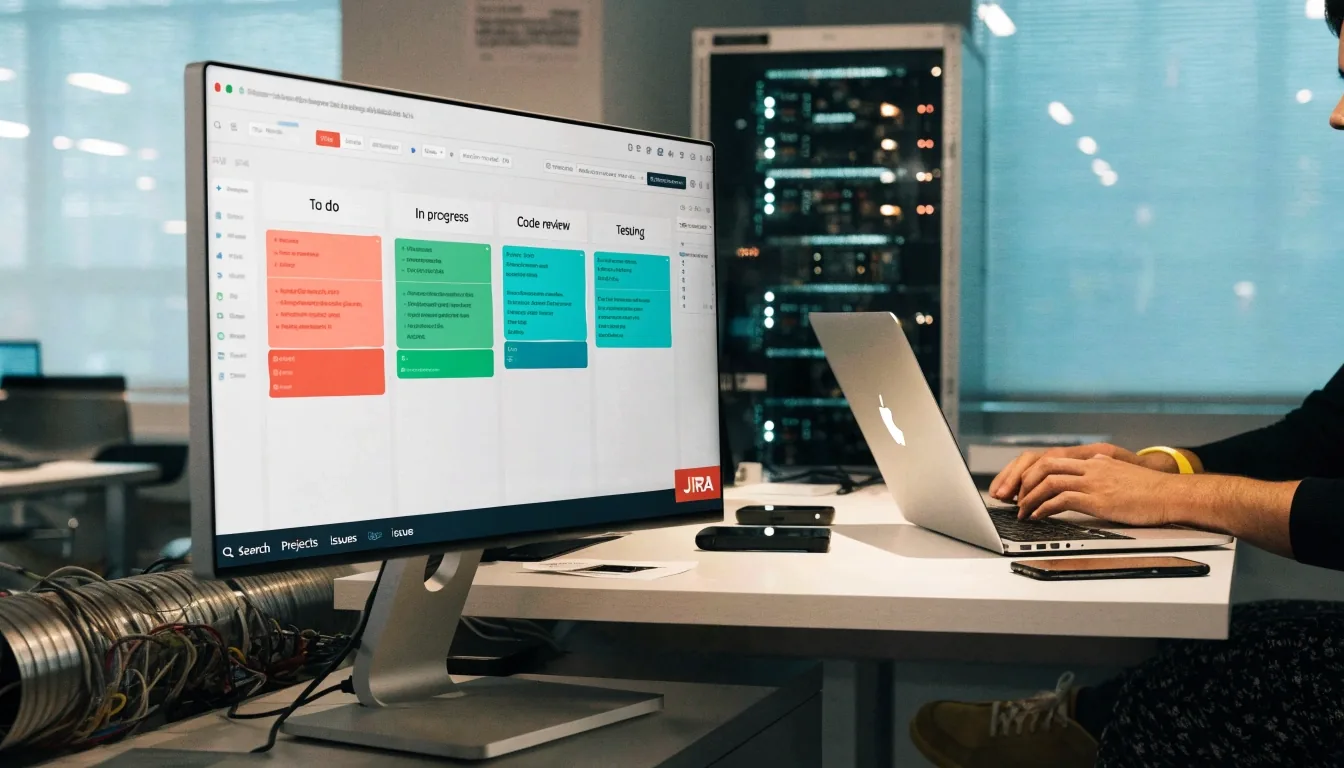
Atlassian Jira remains a standard for issue tracking and agile delivery in software and IT operations teams. Briefings in this area cover how mature teams organise delivery, sprint planning, and incident workflow around that tooling.

The interesting material is in the handoffs. How work moves between delivery and operations, and what happens to that flow during an incident, is where process quality shows up most clearly.

Sprint planning

How teams shape the work that enters a sprint, and where estimation breaks down.

Delivery to operations

The seam between shipping a change and running it — the place briefings look hardest.

Incident workflow

What happens to the ticket flow when something breaks, and whether the process holds.

A robotics-lab workbench, articulated arm joint detail in soft raking light

Market development

Robotics and embodied AI

Poland's robotics sector has moved onto the briefing list. Nomagic, a Warsaw-based robotics startup, raised a $10 million Series B extension in January 2026 and works on VLA-style robotics and warehouse automation. It illustrates the shift from traditional automation toward embodied AI in the Polish market.

Briefings cover that shift as a market development, not as a product endorsement. The relevant question for enterprise readers is where AI-driven robotics changes warehouse and logistics operations, and on what timeline.

Read the research programs

Briefings are dated snapshots · fast-moving areas are flagged in the note itself

How to read a briefing

Briefings are dated and short by design. Treat them as a current-state snapshot: useful for orienting on a topic, not as a final answer. Where a briefing touches a fast-moving area, it will say so.

Readers who want the underlying evidence and the fuller argument should look at the research programs. Briefings point to the relevant program when a topic has one.

Reading key

Snapshot Where the topic stands right now, in a few pages.
Watch-for The questions a team evaluating it should pull on first.
Linked program The fuller research program behind the note, where one exists.
Dated The date the note was written, not a rolling edit.

Next step

Suggest a briefing topic

Topic suggestions are welcome. The most useful suggestions name a specific technology question and the audience that needs the answer — for example, a team about to pick an orchestration platform, or one settling retention rules for shared corporate content. The contact page has the details.

Reach the institute

Address
ul. Józefa Sarego 5, lok. 4, 31-047 Kraków, Poland
Phone
+19082975632
Hours
Monday to Friday, 9:00 AM – 6:00 PM