

About the institute and how it works
INSART Institute of Advanced Research and Technologies SP. Z O.O. is a research organisation based in Kraków, Poland. This page sets out who the institute is, its legal identity, the research mandate it operates under, and how its work is organised day to day.
Legal identity
The institute is registered in Poland as a limited liability company (sp. z o.o.). Its registration details are listed opposite. These identifiers are the ones to use in procurement checks, vendor onboarding, or any formal correspondence with the institute.
The registered office is in Kraków, at ul. Józefa Sarego 5, lok. 4. The institute operates under the full name INSART Institute of Advanced Research and Technologies SP. Z O.O., and that is the name that should appear on contracts, invoices, and purchase orders.
- KRS
- 0000949885
- NIP
- 6762610622
- REGON
- 521068374
- Registered address
- ul. Józefa Sarego 5, lok. 4, 31-047 Kraków, Poland
- Legal form
- Limited liability company
Research mandate
The institute exists to produce applied research on enterprise technology as it is adopted in Poland. Applied is the operative word. The research starts from a question that a working team is actually facing, not from a theoretical gap in the literature.
The mandate covers three broad areas: cloud-native architecture and platform engineering, AI adoption and model governance, and technology resilience including ICT risk management. Within those areas, the institute selects topics, verifies sources, and publishes findings that a technical or operational audience can use.
A topic earns a place in a program when a team inside a Polish enterprise is weighing a decision and the public material available does not settle it. From there the work follows the same path each time: scope the question, gather sources, test the reasoning against how the technology behaves in local deployments, and publish a finding that names its own limits.
Cloud-native architecture, container platforms, and the engineering practice that keeps large estates maintainable as teams and workloads change.
How models reach production inside regulated organisations, what oversight that requires, and where adoption practice and written policy drift apart.
Operational resilience, dependency mapping, and the risk work that sits between engineering teams and the people who sign off on them.
How the work is organised
The institute runs a small number of research programs rather than a long list of one-off projects. Each program has a defined scope, a publication cadence, and a stated method. Topic selection happens within the program scope, which keeps the output coherent rather than reactive. Alongside the programs, the institute publishes technology briefings and compliance and risk notes. Those are shorter-form items tied to the same research areas but with a faster cadence.
Longer-running inquiries with a fixed scope and a published method.
Shorter reads on a single technology decision, tied to the same research areas.
Background reading on obligations, controls, and where practice commonly slips.
Editorial independence
The institute does not sell software, resell vendor platforms, or take commissions from technology suppliers. That constraint is deliberate. Research that recommends a platform while earning from that platform's sales is not research a procurement team can rely on.
Because the institute is not a vendor, it can state when an approach that is widely promoted does not hold up in the Polish market context. It can also say when the available evidence on a question is thin.
- No paid placement of any kind inside published findings.
- No platform recommended in exchange for a commercial arrangement.
- Negative and inconclusive findings are published when the evidence supports them.
- Thin evidence is labelled as thin rather than smoothed over.
- Sources stay checkable, so a reader can retrace the reasoning.
The methodology page describes how sources are verified and how findings are reviewed before publication.
Location and market context
The institute is based in Kraków, one of Poland's two main technology employment centres. That location matters for research: it keeps the institute close to a large engineering labour pool and to the companies that hire from it.
Warsaw shows up repeatedly in the institute's research as well. It is a major outsourcing and software development hub and the centre of much of the country's current startup and AI activity. Both cities inform how the institute frames the Polish market.
That framing is not decorative. Local hiring patterns, language expectations, contract structures, and the way public-sector projects are scoped all shape which technology choices hold up and which quietly fail.
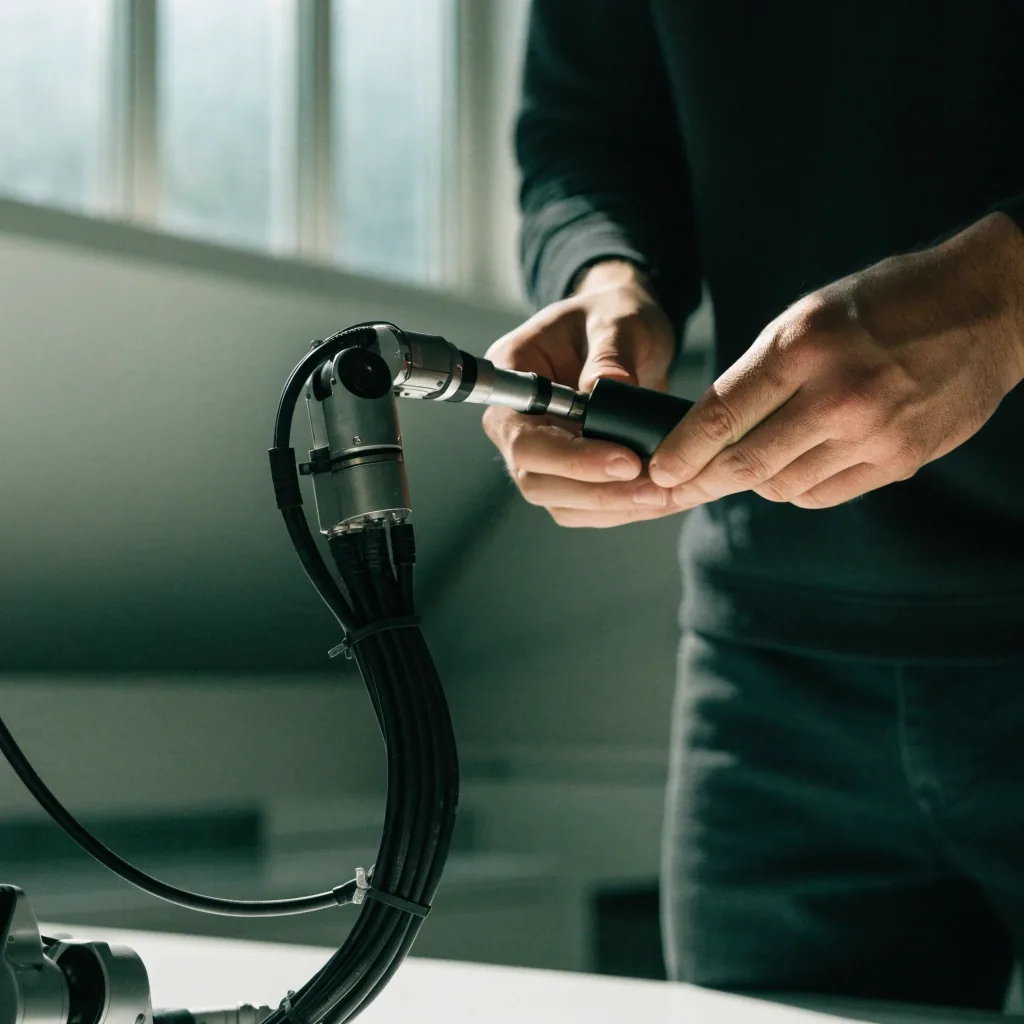
Most research is desk-based, reading and reasoning through documented deployments. Site visits and lab work happen where a question cannot be settled from documents alone, for instance where hardware behaviour or physical infrastructure is the deciding factor.
Registered office: ul. Józefa Sarego 5, lok. 4, 31-047 Kraków, Poland.
Publication pause: one research program is on hold while its method is revised. Its findings stay online and are not withdrawn.
What the institute does not do
The institute does not provide legal advice and does not act as a compliance auditor. Compliance and risk notes are written as background for decision-makers, not as a substitute for professional advice.
The institute does not implement technology on behalf of clients. It does not run delivery teams, take responsibility for production systems, or bid for platform work.
It also does not publish unsourced claims. Where a figure or date appears in published material, it is tied to a verifiable source, and the methodology page describes how that verification works.
How enquiries are handled
Enquiries reach the institute through the contact page, by phone, or by email. Written enquiries are read by the research team. Response depends on relevance to current program work, but every enquiry gets an answer.
- Program questions If an enquiry concerns a specific research program, it is routed to the team working on that program.
- Collaboration If an enquiry concerns a collaboration or a topic proposal, it goes to the editorial group that selects topics.
- Press Press and citation requests are answered from the same inbox and handled in the order they arrive.
- Contact Contact the institute / [email protected]
Office hours
Monday to Friday, 9:00 AM – 6:00 PM. Phone +19082975632.
Changes to this page
The institute updates this page when its legal details, research mandate, or organisational structure change. The registration identifiers above are the authoritative ones for any formal purpose.
The page was last reviewed in November 2026. If a registry figure here ever disagrees with an entry in the Polish register, the register entry is the one that governs.